We all know the feeling: you open your power app, see the monthly total, and think, “Wait, I haven’t even turned the heater on yet!”
In 2026, staying on top of power bills in NZ feels like a full-time job. Whether you’re a family of four in Auckland or living rural in Northland, the price gap can be a brutal $500 difference a year—even if your habits haven’t changed at all.
If you’re tired of the ‘Post-Winter Bill Shock’ or just sick of paying the ‘regional tax,’ let’s look at why your location is hitting your wallet so hard and how you can actually fight back.
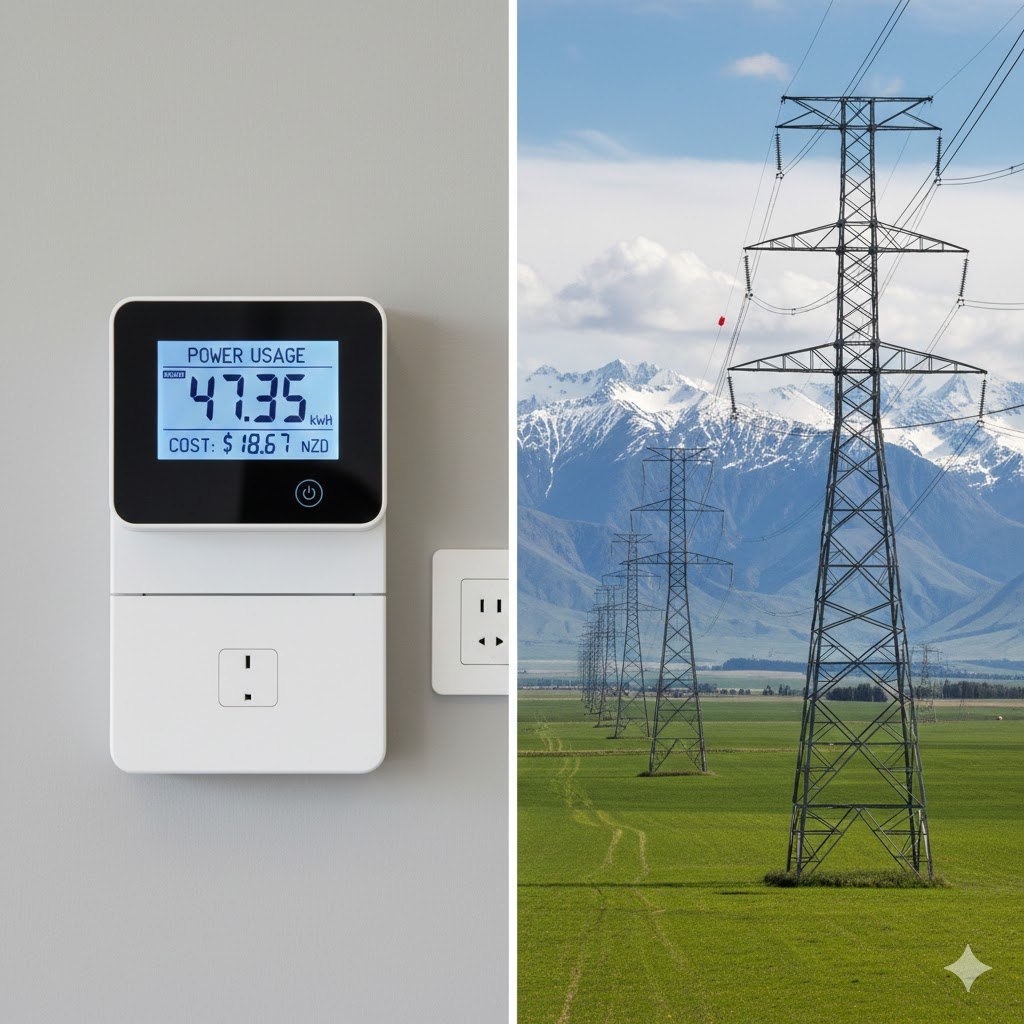
Location, Location, Location!
Why does a coffee in Auckland cost the same as in Wellington, but electricity doesn’t? It all comes down to Lines Charges (the cost of delivering power to your door).
- The City Advantage (Auckland & Wellington): High population density means more people share the cost of maintaining the poles and wires. This usually makes power cheaper in big cities.
- The Rural Reality (Northland & West Coast): Sending power through rugged mountains or long stretches of farmland is expensive. If fewer houses are connected to a long line, each household pays more.
- Distance from the Source: Most of our power is generated in the South Island (Hydro) or Central North Island (Geothermal). The further the “delivery” journey, the higher the cost.
📊 NZ Power Rates: Auckland vs Regions (As of Feb 18, 2026)
| Region | Avg. Rate (per kWh) | Price Level | Monthly Est. (Family of 4) |
| Wellington | ~34.7c | Low | $250 – $290 |
| Auckland Central | ~38.2c | Mid | $280 – $350 |
| Hamilton | ~37.3c | Mid | $270 – $330 |
| Christchurch | ~35.7c | Low | $260 – $310 |
| Northland (Kerikeri) | ~48.4c | High | $450 – $550 |
The Heat Pump Mystery: Cooling vs. Heating
Looking at those monthly estimates above, you might be wondering: “Will using my Heat Pump as an AC in summer ruin my budget?” The short answer is: No. In fact, cooling your home in a Kiwi summer is a bargain compared to the winter struggle. Here’s why the cost feels so different:
- Summer Cooling: Typically, you’re only dropping the temperature by 5-7°C (e.g., from 27°C down to 20°C). It’s an easy job for a modern unit, and the power consumption is relatively low.
- Winter Heating: This is where the bill shock happens. Your heat pump has to work overtime to pull warmth from the 5°C outside air to reach a cozy 20°C inside. That’s a 15°C jump!
My Golden Rule: If you’re still using those old-school plug-in fan heaters or oil columns, stop immediately. They can use up to 3 times more electricity than a heat pump to produce the same amount of heat. Set your heat pump to a steady 18-20°C and leave it—constant switching on and off actually uses more power.
💡Top Tips to Slash Your NZ Power Bill
1. Low User vs. Standard User: The “Family of 4” Trap
- Low User: Best for small households (1-2 people). Lower daily fee, but higher price per unit.
- Standard User: The winner for a family of 4. You pay a higher daily fee, but the price per unit (kWh) is much lower. If your bill is consistently over $180/month, make sure you are on a Standard Plan.
2. Master the “Peak” Game ⏰
Most NZ providers use Time-of-Use (TOU) pricing. Electricity is expensive when everyone else is awake.
- Peak Times: 7 AM – 9 AM & 5 PM – 9 PM (Most expensive)
- Off-Peak: 9 PM – 7 AM (Much cheaper)
- My Pro Tip: I never run the dishwasher or dryer before 9 PM. Set the “Delay Start” timer to run at midnight—you’ll save money while you sleep!
3. The “Power + Gas” Bundle Hack 🎁
Don’t pay two different companies. Bundling services like Gas + Power or Broadband + Power can trigger “Multi-saver” discounts. Companies like Mercury or Contact often offer $150–$300 credits for bundling.
4. The “Hour of Power” & Dehumidifiers
- Electric Kiwi: Offers 60 mins of free power daily. Coordinate all your laundry for that one hour!
- The Dehumidifier Trick: NZ houses can be damp. A dry house warms up 20% faster, making your heater much more effective and cheaper to run.
Final Thoughts
Saving on electricity in NZ isn’t about sitting in the dark; it’s about timing and plan choice. Before you sign a long-term contract, check your local lines company and use Powerswitch.org.nz at least once a year to ensure you’re on the best deal.
Leave a Reply